Last updated on March 31st, 2026 at 09:43 am
TMI meaning in text is one of those internet slang terms that almost everyone has seen—but not everyone fully understands. You might come across it in a casual chat, a meme, or a comment section and wonder, “Wait… what does TMI actually mean here?” 🤔
Don’t worry—you’re not alone. Language evolves fast online, and texting slang can feel overwhelming. This guide breaks down the meaning of TMI in text messages, where it came from, how people really use it today, and when it’s appropriate (or awkward 😬) to say it.
By the end of this article, you’ll confidently understand what TMI means in text, how to use it naturally, and how to avoid common mistakes—all explained in a friendly, human way.
What Does TMI Mean in Text? 💬
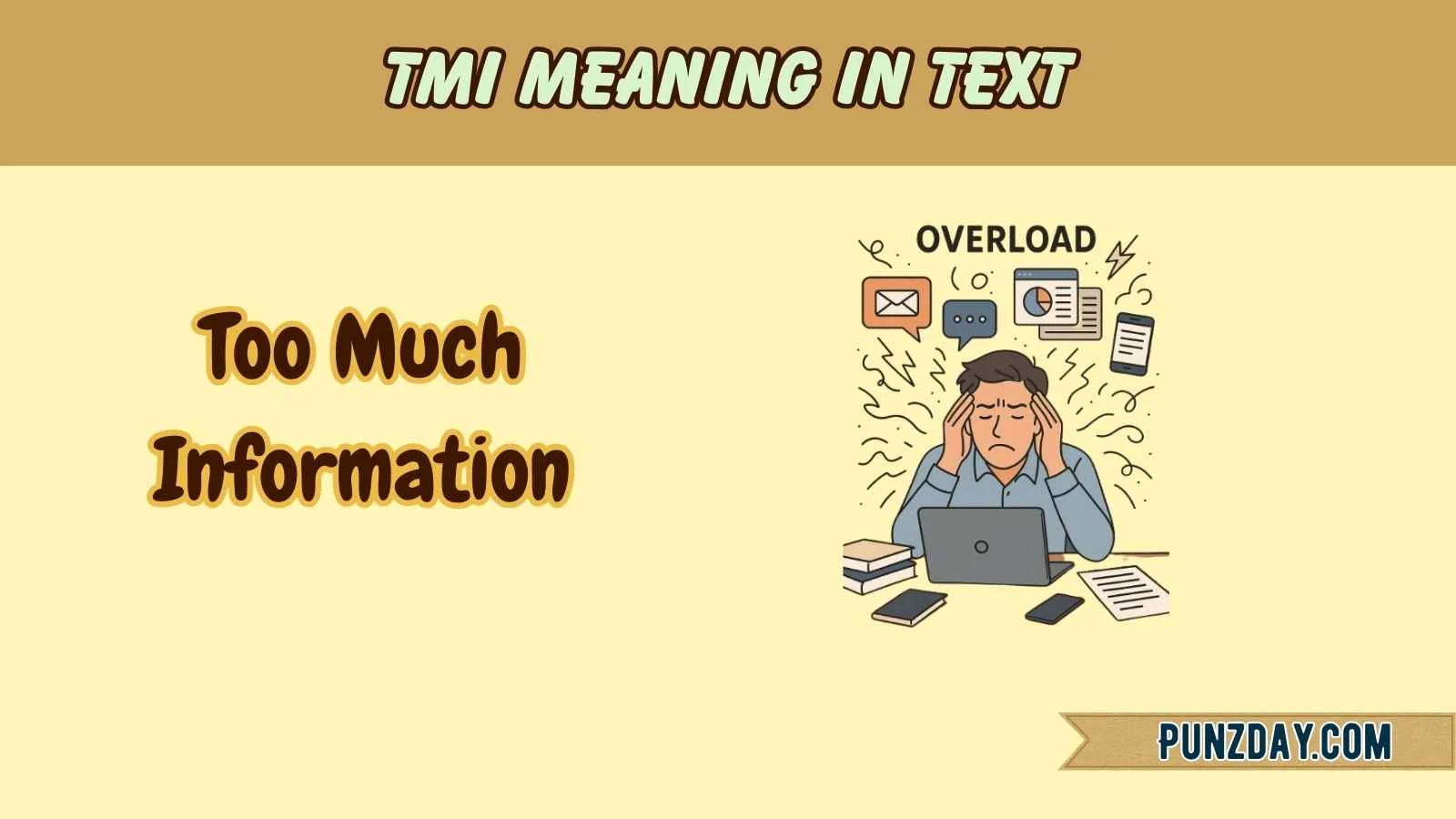
The TMI meaning in text is simple:
TMI stands for “Too Much Information.”
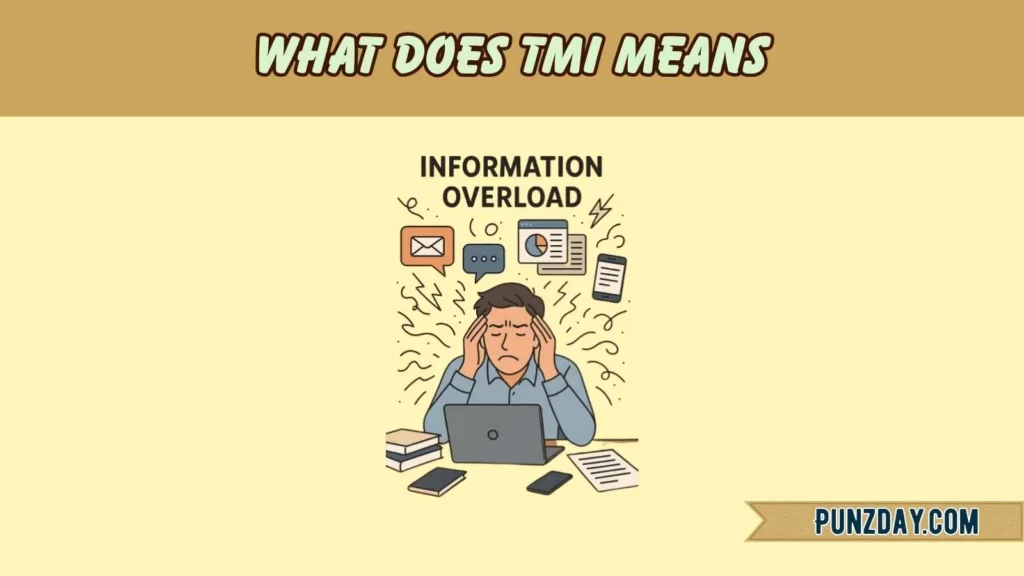
It’s used when someone shares details that are considered unnecessary, overly personal, awkward, or uncomfortable—especially in casual conversation.
In texting and online chats, TMI is usually said humorously or playfully, not as a serious insult.
“I didn’t need to know that.” → That’s basically what TMI means 😄
TMI Meaning in Text vs. Real Life Conversations
While TMI exists in spoken language, it’s far more common in text messages, social media, and online comments.
Here’s why:
- Texting encourages oversharing 🫣
- Online spaces feel informal and safe
- People joke more freely in digital chats
In real-life conversations, saying “TMI” out loud can sound blunt. In texts, it often comes across as lighthearted or funny.
The Origin of TMI: Where Did It Come From? 📜
The phrase “Too Much Information” existed long before texting. However, the abbreviation TMI became popular in the late 1990s and early 2000s.
It gained traction through:
- Early internet forums
- Chat rooms and instant messaging
- Reality TV and pop culture
As texting culture exploded, TMI became a quick, relatable way to react to oversharing.
How TMI Is Commonly Used in Text Messages 📲
The tmi meaning in text depends heavily on context. Most of the time, it’s used in these ways:
1. Playful Reaction
Used jokingly among friends.
Friend: “I ate three burritos and now my stomach hates me.”
You: “TMI 😂”
2. Light Discomfort
When someone shares something slightly awkward.
3. Setting a Boundary
Sometimes, TMI subtly signals that a topic is too personal.
TMI Slang Meaning in Different Contexts
The TMI slang meaning can shift depending on where it’s used.
| Context | Meaning |
|---|---|
| Friends texting | Funny or teasing response |
| Social media comments | Public oversharing reaction |
| Work chats | Warning sign 🚨 (use carefully) |
| Family group chat | Awkward but honest feedback |
Is TMI Rude or Harmless? 🤷
This is a common question.
The answer: It depends.
TMI is usually harmless when:
- Used among friends
- Said with emojis 😂😅
- The topic isn’t deeply personal
It can feel rude if:
- Someone is opening up emotionally
- Used in professional settings
- Typed in all caps: TMI!!!
Examples of TMI in Text Messages 📝
Here are real-life style examples to show the tmi meaning in text clearly:
- “I didn’t need to know about your rash… TMI 😬”
- “Bro, TMI. Please stop.”
- “LOL TMI but okay 😂”
- “That story was definitely TMI.”
TMI vs. Oversharing: Are They the Same?
They’re closely related—but not identical.
Oversharing is the action.
TMI is the reaction.
Someone overshares → Someone else says “TMI.”
When Should You Avoid Using TMI? 🚫
Even though it’s common slang, TMI isn’t always appropriate.
Avoid using it when:
- Someone is vulnerable
- Discussing health or trauma
- In professional or formal chats
How to Respond If Someone Says “TMI” to You
It happens to everyone 😅
Best responses:
- “LOL my bad 😂”
- “Oops, noted!”
- “Okay, moving on…”
Taking it lightly keeps the conversation comfortable.
TMI Meaning Medical
In the medical field, TMI can sometimes refer to “Too Much Information,” but its usage is usually informal rather than clinical. Doctors or healthcare professionals may use it humorously when a patient shares excessive or unnecessary personal details. However, in formal medical documentation, abbreviations are strictly defined, and TMI is rarely used. Patients should always feel comfortable sharing relevant symptoms, even if they seem personal. What feels like “too much information” might actually help with accurate diagnosis. So, in healthcare, clarity is more important than brevity. TMI in this context is more about casual conversation than official terminology.
TMI Meaning in Social Media
On social media, TMI stands for “Too Much Information” and is widely used to react to oversharing. People use it in comments or captions when someone reveals something too personal or unnecessary. It can be humorous, sarcastic, or slightly critical depending on the tone. For example, sharing private relationship details or awkward moments may trigger a “TMI” response. It’s especially popular on platforms like Twitter, Instagram, and TikTok. The term helps users set boundaries in digital conversations. Overall, it’s a quick way to say “that was more than I needed to know.”
TMI Too Much Information Meaning from a Girl
When a girl uses TMI, it usually means “Too Much Information,” but the tone can vary. It might be playful, teasing, or slightly uncomfortable depending on the situation. For instance, she could say TMI if someone shares something overly personal or embarrassing. In friendly chats, it’s often used jokingly to lighten the mood. However, it can also signal that a boundary has been crossed. Context, emojis, and tone matter a lot in understanding the intent. So, it’s not always negative—it can be casual or humorous too.
What Does TMI Mean on Snapchat
On Snapchat, TMI means “Too Much Information” and is often used in quick chats or snaps. Users may reply with TMI when a message includes awkward, personal, or unnecessary details. Since Snapchat is a casual and fast-paced platform, slang like TMI is very common. It’s usually used in a lighthearted or joking way among friends. Sometimes, it can also hint that the sender should dial back on details. Emojis often accompany TMI to soften the tone. Overall, it’s part of everyday Snapchat slang culture.
What Does TMI Mean on Instagram
On Instagram, TMI stands for “Too Much Information” and appears in comments, captions, or DMs. People use it when someone shares overly personal stories or details in posts. It can be humorous or slightly critical depending on how it’s used. Influencers and users alike often encounter TMI reactions when posting personal content. It helps express discomfort without being too harsh. In many cases, it’s meant to be playful rather than offensive. The meaning remains consistent but depends heavily on context and tone.
TMI for Today Meaning
“TMI for today” is a casual phrase meaning “that’s enough information for now.” People use it when they feel overwhelmed or slightly uncomfortable with what’s being shared. It’s often said jokingly in conversations with friends. The phrase helps set a light boundary without sounding rude. For example, if someone keeps sharing personal details, another person might say “TMI for today.” It can also be used humorously in storytelling. Overall, it’s a polite and playful way to signal information overload.
TMI Meaning in Kpop
In K-pop culture, TMI has a slightly different twist while still meaning “Too Much Information.” Idols often share “TMI” moments with fans, which are small, random, or trivial details about their day. For example, they might say what they ate or did earlier. Fans actually enjoy these updates because they feel personal and relatable. Unlike the usual meaning, TMI in K-pop is positive and welcomed. It helps build a closer connection between idols and fans. So here, TMI is more about fun and engagement than oversharing.
What Does TMI Mean on TikTok
On TikTok, TMI means “Too Much Information” and is used in videos, captions, or comments. Creators often label content as TMI when sharing personal, awkward, or detailed stories. It’s part of storytelling trends where oversharing is sometimes intentional for entertainment. Viewers may comment “TMI” as a reaction to surprising or uncomfortable details. The term is often used humorously rather than critically. TikTok culture embraces casual and relatable content, making TMI very common. Overall, it adds a fun, expressive layer to communication on the platform.
TMI in Social Media & Online Culture 🌐
On platforms like comments sections or memes, TMI is often exaggerated for humor.
It’s part of internet culture—quick reactions, short expressions, big meaning.
Related Slang Terms Similar to TMI
- NSFW – Not safe for work
- IDC – I don’t care
- LOL – Laugh out loud
- BRB – Be right back
Why Understanding TMI Matters in Digital Communication
Knowing the tmi meaning in text helps you:
- Avoid awkward moments
- Communicate naturally online
- Understand tone and humor better
It’s a small term—but powerful in context.
FAQs:
What does TMI mean in texting?
TMI means Too Much Information. It’s used when someone shares unnecessary or overly personal details.
Is TMI always negative?
No. It’s often playful or humorous, especially among friends.
Can TMI be used professionally?
It’s best avoided in professional or formal settings.
Is TMI considered slang?
Yes. TMI is modern internet and texting slang.
How do I know if something is TMI?
If it’s overly personal or makes others uncomfortable, it might be TMI.
Final Thoughts:
The TMI meaning in text is all about boundaries, humor, and context. It’s a casual way to say, “That’s more than I needed to know,” without being overly harsh.
Used correctly, it adds personality and honesty to digital conversations. Used poorly, it can feel awkward. The key is awareness—and a little empathy.

Walton bae is the creative mind behind Punzday, a lively corner of the internet where clever wordplay and witty puns come to life. With a love for humor and playful twists on everyday moments, Walton turns ordinary situations into a laugh-out-loud experience. At Punzday, words aren’t just words—they’re a reason to smile, think, and chuckle. If smart, lighthearted humor is your thing, you’re in the right place.