Last updated on April 6th, 2026 at 06:21 am
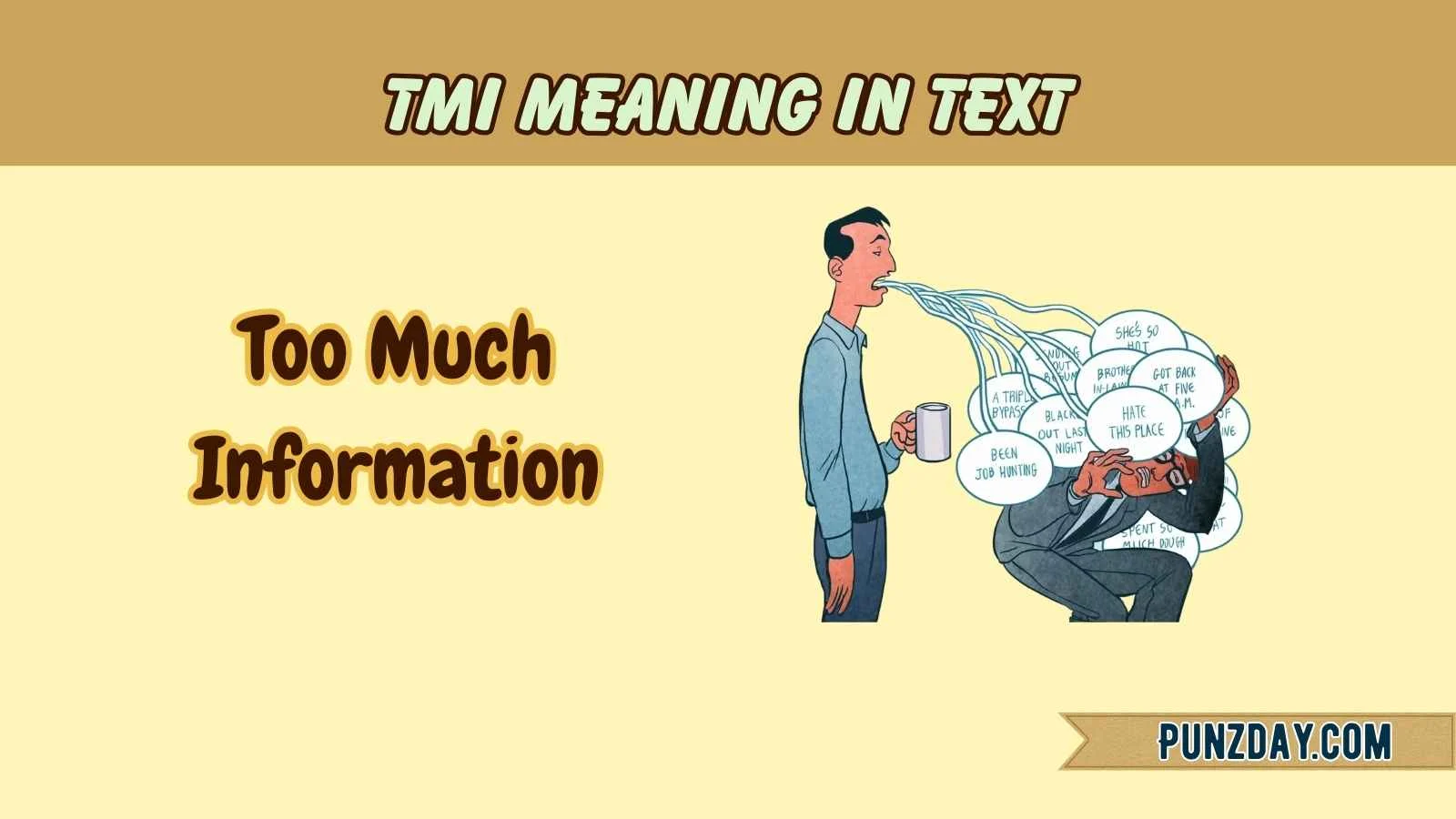
TMI meaning in text refers to the phrase “Too Much Information,” commonly used in online chats, social media, and texting conversations. When someone shares overly personal or unnecessary details, people reply with TMI meaning in text to politely signal discomfort or set boundaries.
In everyday digital communication, TMI meaning in text helps keep conversations light and appropriate without sounding rude. Understanding the TMI meaning in text makes it easier to respond naturally, avoid awkward moments, and communicate more confidently online.
What Does TMI Mean in Text? 📱
The TMI meaning in text is “Too Much Information.” It is used when someone shares details that are overly personal, awkward, graphic, or simply more than the listener wanted to know.
In texting and online chats, TMI is a quick reaction. Instead of explaining discomfort, people just type three letters. It keeps conversations light while still sending a clear message.
TMI is not always rude. Most of the time, it is playful, humorous, or gently corrective.
Depending on tone and emojis, it can mean:
- That was awkward 😅
- I didn’t need those details 🙈
- You crossed a comfort line
- Okay, that’s enough information
TMI Full Form and Literal Meaning 🔍
The full form of TMI is Too Much Information. Literally, it means that the amount of information shared exceeded what was appropriate for the situation.
In digital communication, people rarely say the full phrase. The abbreviation feels faster, friendlier, and more modern. Over time, it became a standard reaction phrase in texting culture.
TMI meaning in text does not depend on grammar rules. It works as a standalone response, a reaction, or even a joke.
The Origin of TMI in Online Culture 🌐
The phrase “too much information” existed long before texting. People used it in spoken conversations, books, and humor. However, the abbreviation TMI gained popularity with the rise of online forums, chat rooms, and early messaging apps.
As digital conversations became faster, people needed shorter expressions. TMI fit perfectly. It was easy to type, easy to understand, and emotionally expressive.
Over time, social media platforms, memes, and texting trends helped spread TMI meaning in text globally. Today, it is recognized across cultures and age groups.
How TMI Is Used in Texting Conversations 💬
TMI meaning in text depends heavily on context. The same word can feel funny, awkward, or even slightly rude depending on how it is used.
Here are common texting situations where TMI appears:
- When someone shares medical details 🏥
- When bodily functions are described 🤢
- When personal relationship issues get too detailed 💔
- When private habits are shared publicly
Often, people add emojis to soften the reaction. For example, “TMI 😂” feels lighter than just “TMI.”
Examples of TMI in Text Messages 📝
Understanding TMI meaning in text becomes easier with examples. Below are realistic and common scenarios:
- Friend: “I couldn’t come today because my stomach was acting up all night.”
Reply: “TMI 😅” - Group Chat: “I haven’t showered in three days.”
Reply: “Okay… TMI 🙈” - Social Media Comment: “I’m sharing my full medical report here.”
Reply: “This feels like TMI.”
These examples show how TMI works as a social signal rather than an insult.
TMI Meaning in Text vs Real-Life Conversation 🗣️
While the meaning stays the same, TMI feels different in text compared to spoken conversation.
In real life, tone of voice matters more. Saying “that’s too much information” can sound harsh if not delivered carefully. In text, TMI feels softer and more casual.
That is why TMI meaning in text is often seen as playful rather than confrontational.
Is Saying TMI Rude or Funny? 🤔
This is one of the most common questions around TMI meaning in text. The answer depends on relationship, tone, and timing.
TMI is usually:
- Funny among friends
- Neutral in casual chats
- Awkward in professional settings
Adding emojis, laughter, or follow-up messages makes it friendlier. Without context, it can feel dismissive.
Tip: Know your audience before using TMI.
TMI Slang Meaning Across Social Media 📲
On social platforms, TMI meaning in text often leans toward humor and exaggeration. People intentionally overshare, expecting someone to reply with “TMI 😂”.
It is commonly used in:
- Instagram comments
- Twitter replies
- Reddit threads
- Snapchat chats
In meme culture, TMI has almost become a punchline.
TMI in Professional and Workplace Texting 💼
Using TMI at work is risky. While the TMI meaning in text remains the same, professional communication requires caution.
Avoid using TMI when:
- Messaging managers
- Emailing clients
- Communicating in formal channels
Instead, use polite alternatives like:
- “That may not be necessary to discuss.”
- “Let’s keep this professional.”
Common Situations Where TMI Is Triggered 🚨
People usually respond with TMI in predictable situations. Recognizing them helps you avoid oversharing.
| Situation | Why It Feels Like TMI |
|---|---|
| Health issues | Too personal for casual chat |
| Bodily details | Uncomfortable for listeners |
| Relationship drama | Overwhelming details |
| Private habits | Unnecessary disclosure |
How to Respond When Someone Says TMI 😳
If someone replies with TMI, don’t panic. It usually means they want to change the topic.
Healthy responses include:
- “Haha, my bad 😅”
- “Oops, overshared!”
- “Okay, moving on 😂”
Understanding TMI meaning in text helps you handle it gracefully.
TMI vs Oversharing: Are They the Same? 🔄
They are closely related but not identical. Oversharing is the action. TMI is the reaction.
Oversharing happens when someone shares too much. TMI meaning is the signal that it happened.
Think of TMI as feedback rather than judgment.
TMI Meaning From A Girl
When a girl uses TMI in a conversation, it usually means she thinks something shared is too personal or unnecessary.
It can be a playful way to tell someone they crossed a boundary without sounding rude.
Sometimes, girls use TMI jokingly among friends when discussing embarrassing or awkward topics.
It may also reflect comfort level, showing she is open but still setting limits.
In casual chats, it often appears after someone shares details about relationships or personal life.
The tone matters a lot, as it can be sarcastic, funny, or slightly serious.
Overall, it’s a light expression used to manage personal boundaries in conversation.
TMI Meaning Medical
In medical terms, TMI is not an official abbreviation but is often used informally.
Healthcare professionals or patients may use it jokingly when too many details are shared.
For example, describing symptoms in extreme detail can sometimes be called TMI.
It is commonly used in patient-doctor conversations to lighten the mood.
However, in real medical practice, detailed information is often important and necessary.
So, while it may feel like TMI, it can actually help in proper diagnosis.
The phrase remains casual and is not used in formal medical documentation.
What Does TMI “Too Much Information” Mean on Instagram
On Instagram, TMI is commonly used in comments, captions, or DMs.
It usually reacts to oversharing, especially about personal or awkward topics.
Users often comment TMI on stories that reveal private or unnecessary details.
It can also be used humorously when someone posts something slightly embarrassing.
In reels or memes, TMI adds a relatable and funny touch to content.
The tone is mostly lighthearted, not meant to offend the person.
Overall, it’s part of social media slang used to keep conversations fun and engaging.
What Does TMI Mean on Snapchat
On Snapchat, TMI is used in chats when someone shares too much personal information.
It often appears in quick responses to snaps or messages that feel overshared.
Friends use it jokingly to tease each other in a friendly way.
Since Snapchat is more private, TMI can sometimes signal mild discomfort.
It is also used in streak conversations to react quickly without long replies.
The meaning stays consistent with “Too Much Information” across the platform.
It’s a casual, slang-based expression widely understood by users.
TMI For Today Meaning
“TMI for today” is a phrase people use when they feel overwhelmed by information.
It suggests that they’ve heard enough personal or unnecessary details for the day.
This phrase is often used humorously in conversations or online posts.
It can also signal that the topic is becoming uncomfortable or excessive.
People use it to politely end or shift the conversation.
It reflects a limit on how much someone wants to hear or share.
Overall, it adds a light and relatable tone to everyday communication.
TMI Other Meaning
While TMI mainly means “Too Much Information,” it can have other meanings in different contexts.
In business or tech, it might stand for “Technical Manual Index” or similar terms.
Some communities create their own meanings based on context or inside jokes.
However, these alternate meanings are less common in everyday conversation.
The slang version remains the most widely recognized meaning globally.
Understanding the context helps identify the intended meaning correctly.
In most casual situations, it almost always refers to oversharing.
TMI “Too Much Information” Meaning in Kpop
In K-pop culture, TMI has a slightly different and fun meaning.
Idols often share “TMI” as small, random facts about their day.
These details are usually trivial but interesting to fans.
For example, what they ate or a small daily habit can be called TMI.
Fans enjoy these moments as they feel more personal and relatable.
It’s commonly used in interviews, fan meetings, and social media updates.
Here, TMI doesn’t mean oversharing but rather sharing cute, everyday details.
TMI Urban Dictionary
According to Urban Dictionary, TMI stands for “Too Much Information.”
It describes situations where someone shares overly personal or unnecessary details.
The platform includes humorous and exaggerated examples of its use.
Definitions often highlight awkward or embarrassing oversharing moments.
Urban Dictionary reflects how slang evolves through real user contributions.
It shows how TMI is used in different tones, from funny to sarcastic.
Overall, it confirms TMI as a widely recognized internet slang term.
Psychology Behind Saying TMI 🧠
Humans naturally protect social boundaries. TMI helps enforce those boundaries without confrontation.
Psychologically, it:
- Reduces discomfort
- Uses humor to soften tension
- Signals emotional limits
This explains why TMI meaning in text remains popular across cultures.
Generational Use of TMI
Younger generations use TMI more casually. Older users may prefer full sentences.
However, thanks to social media, 👥 TMI meaning in text is now widely understood by all age groups.
Related Slang Terms Similar to TMI
Here are similar expressions:
- “That’s personal”
- “Didn’t need to know”
- “Overshare alert”
- “Too detailed”
FAQ :
What does TMI mean in texting?
TMI meaning in text stands for Too Much Information and is used when someone overshares.
Is TMI always negative?
No. It is often humorous and lighthearted, especially among friends.
Can I use TMI professionally?
It is better avoided in formal or workplace communication.
Is TMI slang?
Yes. It is an internet slang abbreviation commonly used in digital chats.
How do I avoid TMI moments?
Think about your audience and keep personal details minimal.
Final Thoughts:
Now that you fully understand TMI meaning in text, you can navigate digital conversations with confidence. This small abbreviation plays a big role in modern communication. It protects boundaries, adds humor, and keeps conversations comfortable.
Being aware of when information becomes “too much” helps you connect better, avoid awkward moments, and respect others’ comfort levels.
CTA: Want to learn more modern slang and texting meanings? Explore our related posts and stay fluent in today’s digital language 💬✨