nty meaning in text is a common question for anyone trying to understand modern online slang, quick replies, and everyday digital conversations. In today’s fast-paced messaging world, short forms like NTY help people respond quickly while staying polite and clear. This guide explains the true meaning, usage, and tone behind NTY so you never feel confused again.
Understanding the nty meaning in text can improve how you read chats, reply to friends, and communicate confidently on social media. We’ll explore where NTY is used, what it really expresses, and when it’s the right or wrong response to send. By the end, the nty meaning in text will feel simple, natural, and easy to use in daily conversations.
What Does NTY Mean in Texting?
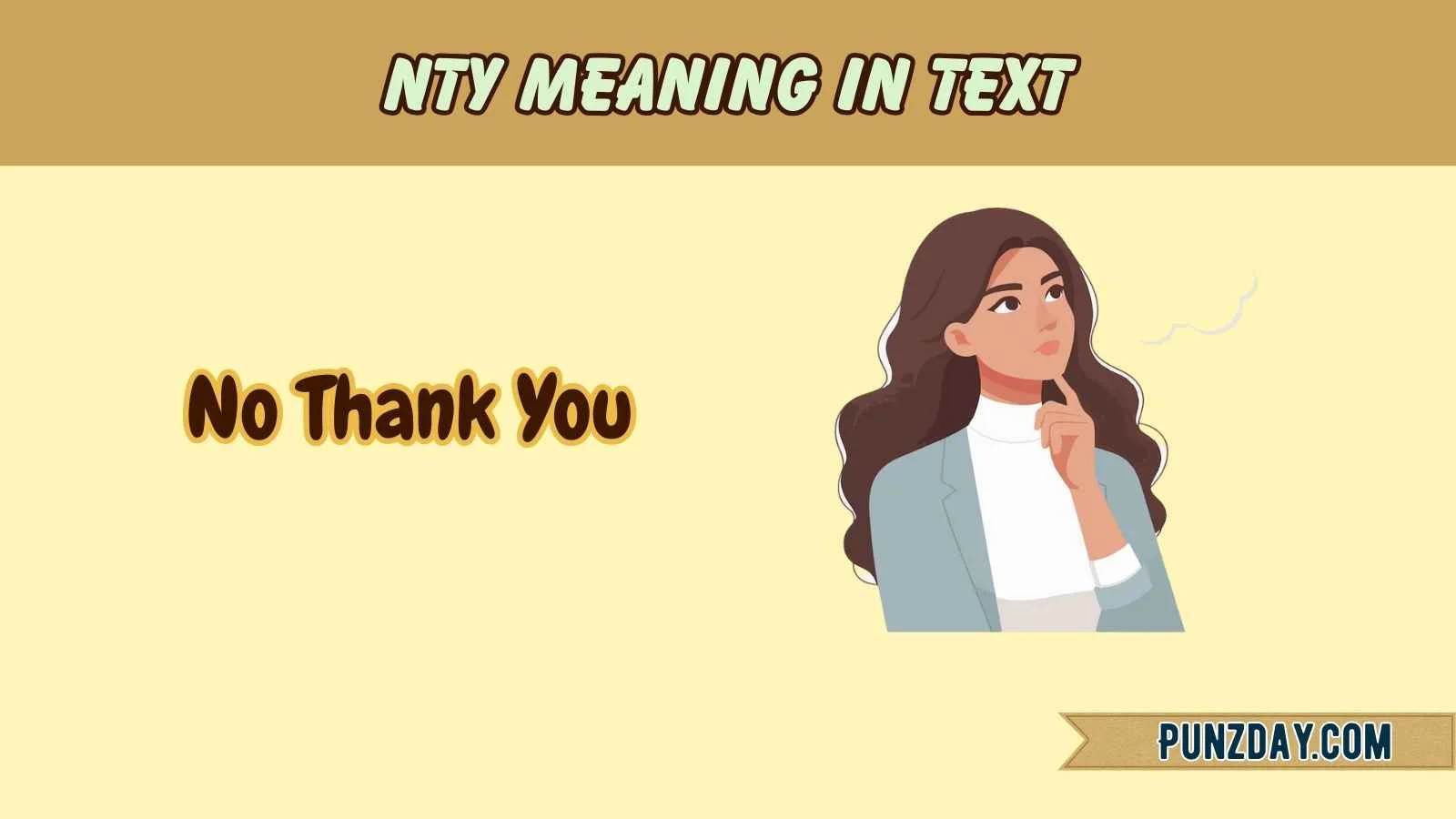
The NTY meaning in text is simple: it stands for No Thank You. People use this short abbreviation to politely decline an offer, invitation, suggestion, or request without sounding rude.
Instead of typing a full sentence, users choose NTY because it is:
- Fast to type
- Polite in tone
- Common in online chats
- Easy to understand in context
Digital communication rewards speed, and abbreviations like NTY help conversations flow naturally ⚡.
Origin of NTY in Online Communication
The phrase No Thank You existed long before texting. However, the abbreviation NTY became popular with:
- SMS texting culture in the early 2000s
- Instant messaging apps and gaming chats
- Social media comment replies
As character limits and fast responses became normal, shortened forms like NTY, TY, BRB, and LOL spread widely across digital platforms 🌐.
“Online language evolves for speed, clarity, and emotional tone.”
When People Use NTY in Text Messages
Understanding NTY meaning in text becomes easier when you see real-life situations. People commonly use NTY when they want to refuse politely without writing a long explanation.
Common Situations
- Declining food or drinks
- Rejecting an invitation
- Turning down help or advice
- Saying no in online games or group chats
Example Conversations
Friend: Want to join us for dinner?
You: NTY, maybe next time 😊
Colleague: Need help finishing the report?
You: NTY, I’ve got it covered.
Notice how NTY keeps the tone respectful and calm.
Tone and Emotion Behind NTY
Even though NTY is short, it carries a polite emotional signal. Tone depends on context, punctuation, and relationship.
| Message Style | Perceived Tone |
|---|---|
| NTY | Neutral and quick |
| NTY 😊 | Warm and friendly |
| NTY. | Firm or serious |
| nty | Casual and relaxed |
Small details in texting can change emotional meaning dramatically.
NTY vs Other Similar Text Abbreviations
To fully understand NTY meaning in text, compare it with similar responses.
| Abbreviation | Meaning | Tone |
|---|---|---|
| NTY | No Thank You | Polite refusal |
| Nope | No | Casual or blunt |
| Nah | No | Very informal |
| Pass | Decline | Neutral/slang |
Among these, NTY is the most respectful option 👍.
Is NTY Formal or Informal?
The abbreviation NTY is considered informal digital language. It is perfect for:
- Friends and family chats
- Social media replies
- Gaming conversations
- Casual workplace messaging
However, in professional emails or formal communication, writing the full phrase No thank you is more appropriate.
Should You Use NTY in Professional Settings?
This depends on the workplace culture. Some modern teams accept short chat language, while traditional environments expect full sentences.
Safe Professional Alternatives
- No thank you, I appreciate the offer.
- Thank you, but I’ll pass this time.
- I appreciate it, but I’m okay for now.
Choosing the right tone shows communication intelligence 💼.
How NTY Appears on Social Media
On platforms like messaging apps, forums, and comment sections, NTY meaning in text stays consistent. Users apply it to:
- Decline trends or challenges
- Refuse product offers
- Respond to jokes playfully
Because of its short form, NTY fits perfectly into fast-scroll digital culture.
Psychology Behind Polite Digital Refusal
People prefer NTY because it balances two needs:
- Saving time
- Maintaining kindness
Communication research shows that short polite refusals reduce conflict and protect relationships. NTY works as a soft social boundary 🤝.
Common Misunderstandings of NTY
Although clear, NTY can sometimes be misread.
- Seen as cold if no emoji or context
- Confusing for people unfamiliar with slang
- Appearing dismissive in serious discussions
Adding a short phrase like maybe later improves clarity and warmth.
Examples of NTY in Different Contexts
Casual Chat
NTY, I’m staying home tonight 🏠
Online Shopping Offer
NTY, not interested right now.
Gaming Invite
NTY, finishing another quest first 🎮
Group Plan
NTY, but have fun everyone!
Each example keeps the refusal friendly and respectful.
Benefits of Understanding Text Abbreviations
Learning meanings like NTY meaning in text improves:
- Digital confidence
- Social awareness
- Communication speed
- Online professionalism
Modern literacy now includes internet language fluency 🌍.
Related Slang You Should Know
- TY – Thank you
- YW – You’re welcome
- IDK – I don’t know
- IMO – In my opinion
For deeper understanding, explore Related Article about common texting abbreviations.
FAQ:
Does NTY always mean no thank you?
Yes, in nearly all digital conversations, NTY represents No Thank You.
Is NTY rude?
No. It is actually a polite way to decline, especially when paired with a friendly tone or emoji.
Can NTY be used in emails?
It is better to write the full phrase in formal emails for professionalism.
Why do people prefer NTY instead of typing the full sentence?
Because texting culture values speed, simplicity, and clarity.
Conclusion:
Understanding the NTY meaning in text helps you communicate politely, quickly, and confidently in today’s digital world.
This small abbreviation carries a big purpose: respectful refusal without unnecessary words.
As online language continues to evolve, knowing these expressions keeps you socially aware and communication-ready in every chat, message, or comment 💬.